Listen to Sermon Audio
II Corinthians 9:6-15
Every night about 9:30 pm, unemployed, homeless and hungry men gather under the elevated train in Queens, NY; where relief comes in the form of Jorge Munoz’s white pickup truck, filled with hot food, coffee, and hot chocolate. The men eagerly accept containers of chicken and rice from Munoz. For many, this is their only hot meal of the day. One of the regulars says, “I thank God for touching that man’s heart.”
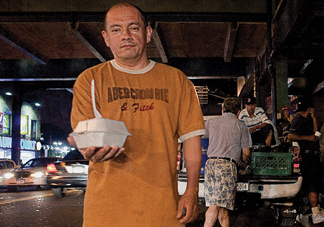 Munoz began his meal program, now his nonprofit, in the summer of 2004 when he and his mother began preparing 20 home-cooked meals daily. Numbers gradually increased over the years to 35, 60 and now about 140. Munoz estimates he has served more than 70,000 free meals since 2004. Sustaining this endeavor consumes most of his life. He and his family are funding the operation through their savings and his weekly $700 paycheck.
Asked why he spends so much time to help people he doesn’t know, he answers, “I am grateful for a stable job, my mom, my family, a house; everything I want I have. And these guys don’t, so I just think, ‘OK, I have the food.’ At least for today, they’re going to have a meal to eat.” 1
Jorge Munoz illustrates what Paul is talking about in II Corinthians, where in five verses he uses the words ‘thanks’ and ‘generosity’ three times each. In other words, ‘gratitude’ (thanksgiving) and ‘generosity’ are kissing cousins. It is because Munoz is content and thankful for what he already has that he is able to act out of that gratitude and freely express generosity.
Gratitude; being thankful for the many blessings we have leads to generosity, which then leads to expressing thanksgiving. So really thanksgiving and generosity are more than kissing cousins, they’re cyclical in nature; gratitude leads to generosity which leads to gratitude. (more…)
 On the other hand, author, philosopher, historian Thomas Carlyle tells how, when he was a boy, a beggar came to the door. His parents were out and he was alone in the house. On a boyish impulse, he broke into his own savings bank and gave the beggar all that was in it. And he tells us that never before or since did he know such sheer happiness as came to him in that moment.
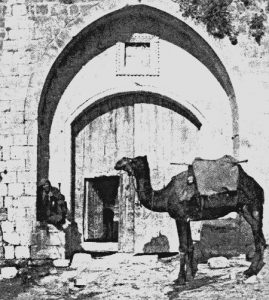 Now once in a while, there was an insistent camel owner, who for whatever reason wanted to get inside the city walls even though the main gate had already been closed. Was that possible?